For many dogs, taking them for a walk in the woods and trying to get their attention is the equivalent of standing a child next to the world’s biggest chocolate fountain and expecting them to ignore that and have their full attention on you… it isn’t happening!
These kinds of environments, such as the woods, countryside walks, we often refer to as ‘highly stimulating’. There is a lot for your dog to take in and it can easily become overwhelming. If you’re finding your dog is becoming overwhelmed on these type of walks, scale it back and opt for less stimulating walks, for example, the local park, a pavement walk, or for some dogs the beach is such a walk – not because they don’t love it but there are typically fewer distractions and stimulus to contend with.
One major sign that your dog is too stimulated on a walk is their utter refusal to take any notice of you whatsoever. If you’re dangling a delicious treat in front of your dog’s face and they refuse to acknowledge it at all, it means one of two things:
- The treat wasn’t high value enough, or
- Their attention is captured by the overly stimulating environment around them.
Most of us have been there – you’re out on a walk and desperately pleading to get your dog to focus on you rather than that pigeon on the other side of the track, but they’re having none of it. So, what do you do?
There is no ‘quick fix’ for this, but if you are persistent and consistent, you can train your dog to focus on you even in stimulating environments. This will also mean in time that those walks in the woods can be enjoyed by both you and your dog without either of you getting stressed, anxious or overwhelmed.
Training
Training starts in the home. Some people will talk about the three D’s when training – Distance, duration and distraction.
- Distraction – you want as few distractions as possible when trying to teach them something new
- Duration – you will only be able to hold their attention or gain their true focus for short spells at first
- Distance – to maintain their attention you will start with them near to you when training a command.
Now as they progress you can increase the number of distractions, along with the duration and distance between you and your dog.
Exercises
‘Watch me’
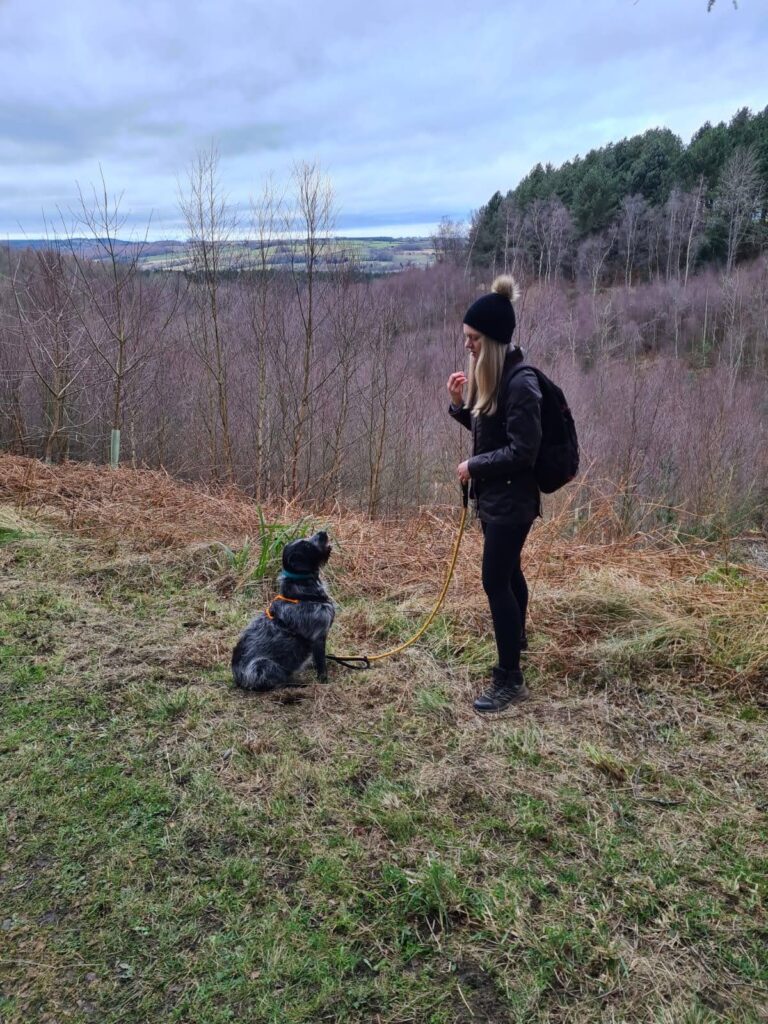
One of the key things you can do when your dog is out on a walk and pulling like a lunatic because they’ve seen a squirrel or whatever they’re interested in, and you want their attention on you, is the ability to make eye contact with your dog. Once you get eye contact with your dog, it breaks their focus and acts as a reset which can really help calm them down. You want their attention to be on you and not everything else around them.
A key command I use with my dog to get her attention on a walk or when she’s focused on ‘prey’ is the ‘watch me’ command. You could call this ‘look’ or ‘here’ or whatever you want but keep the term you use consistent!
So to teach this (remember we are starting to teach this at home, considering the three D’s, before progressing to doing this on walks)…
- Take a high value treat in your hand and have your dog close to you so they can see the treat
- Bring the treat up to your eye level and hold it next to your eyes
- Wait there until your dog looks up and glances at you/the treat
- When they do give them lots of praise and give them the treat
- Then start to do this and as you lift your hand up to your eyes use your verbal command ‘Watch me’
- Each time they do it, lots of praise and give them the treat.
- As they improve increase the D’s – distractions, distance and duration.
Check in
Having your dog ‘check in’ on you while out on walks is a great way to assist in training their recall and again get their focus back on you and not their environment.
Tips to train…
- Take your dog to an empty secure field/garden and if in a public/unsecured area attach a long line
- Completely ignore your dog and wait for them to give you attention (word of warning – you may have a long wait)
- As soon as your dog checks in on you/ looks at you – praise them! Instigate play/lots of cuddles/give them a treat. Let them know that giving you attention is the best thing ever!
- Practice, practice, practice.
Over time your dog will learn that focusing on you is far more rewarding than looking off somewhere else and wandering off in search of that pigeon.
‘Leave’
Our dogs have high prey drives, and part of this is what makes walks in interesting places a whole lot more exciting. In the event they do start to pursue prey or chase a cat, etc, having the ‘leave’ command down to a T is invaluable.
To teach…
- Start with food – put a treat on the floor in front of your dog and tell them to ‘leave’ (if they won’t at first, cover it with your foot if needs be)
- When they do leave the treat or if they look away from it, give them lots of praise and then give them a different treat from your hand to reward
- You can even designate other household animals as “leave” and once your dog has mastered the command, they should completely leave their brothers and sisters alone.
Other tips
- Small world – start with small ‘boring’ walks and build up gradually. What may be a boring walk for you will still provide a lot of stimulation for your dog.
- Rest and recover – if your dog has had a very stimulating day give them plenty of opportunity to recover their spoons. If they need a rest day, don’t be afraid to take one.
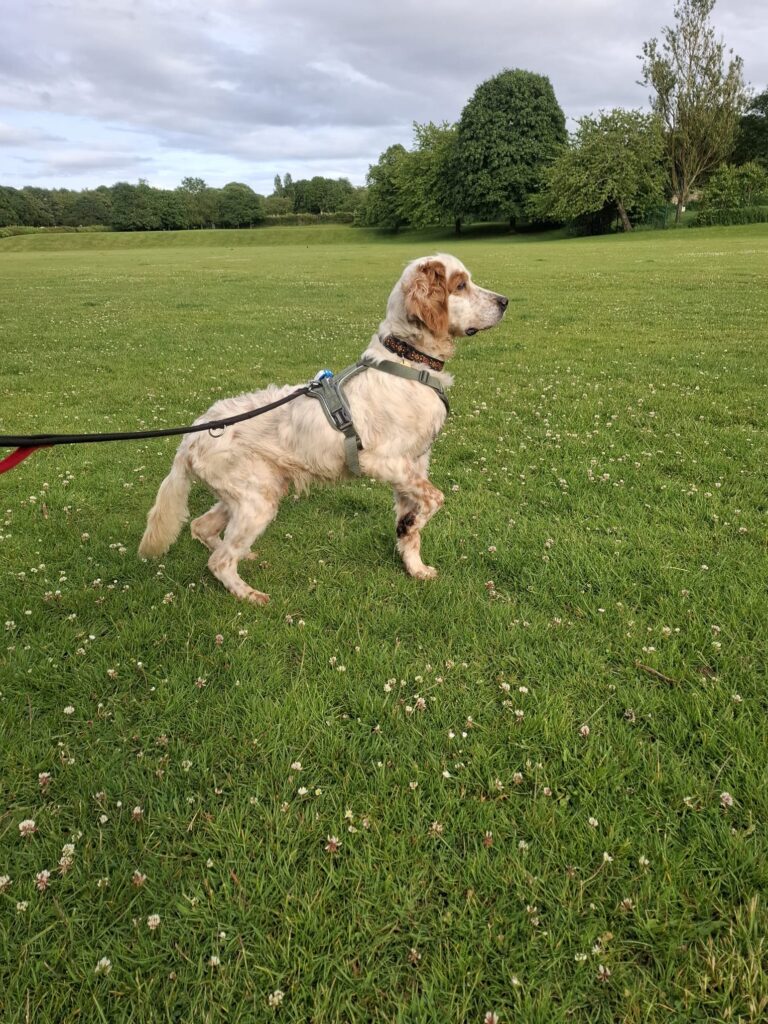
- Harnesses – we always advise every dog is walked on a properly fitting harness, Perfect Fit tends to be the best for setters and pointers as it comes in a variety of sizes and shapes but Embark and Ruffwear are good harness too for other options. The the harnesses we recommend have a front clip attachment which can be invaluable if your dog is overly stimulated on a walk and you need greater control of them to stop any pulling.
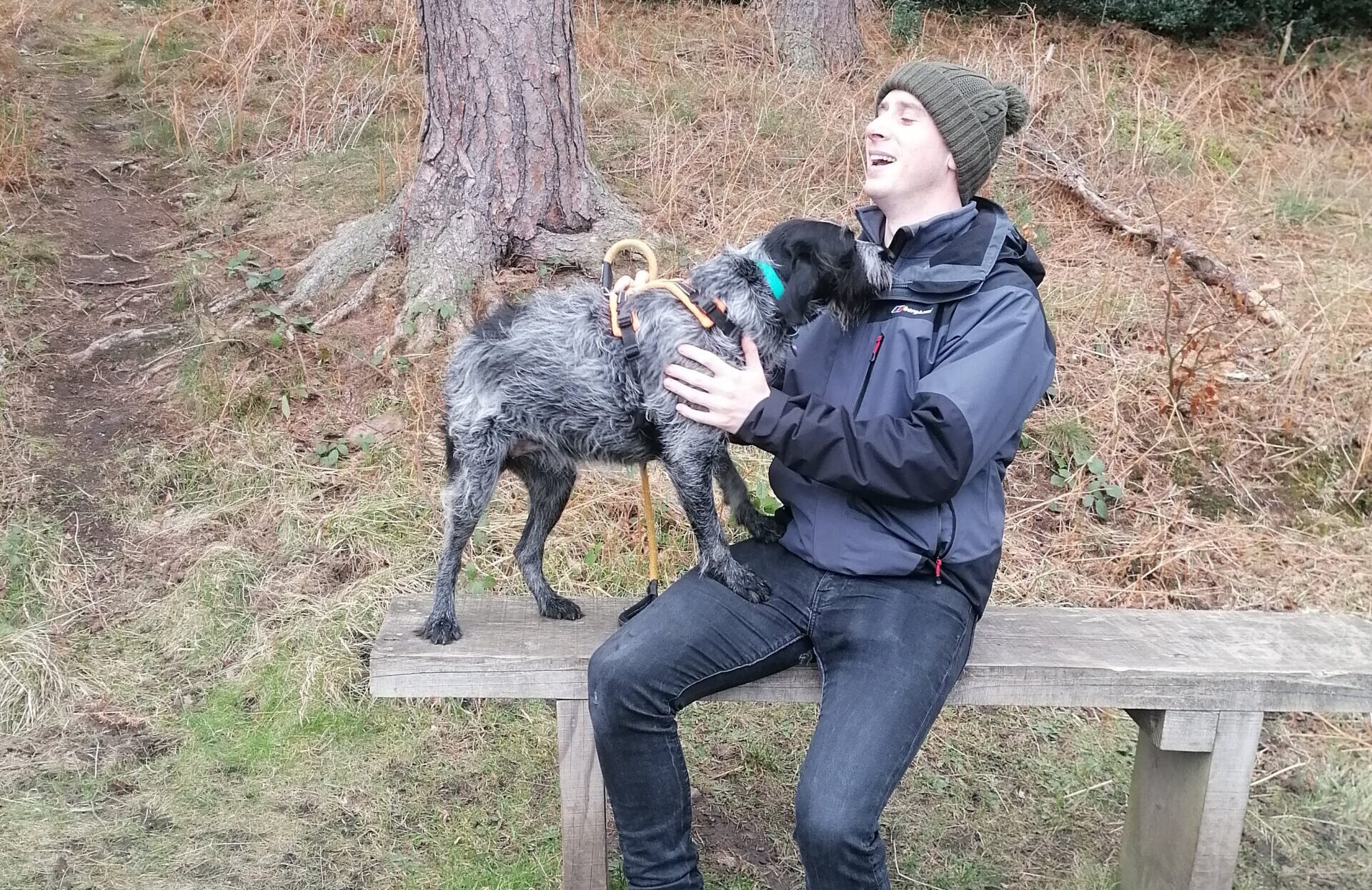
- Canicross belts – using a canicross belt help move the pressure of pulling from your arms and shoulders, down to bigger muscles in your legs and around your hips. Canicross belts are often the best for this because they are designed for a dog to be able to pull without causing an injury to yourself or your dog. There are some walking belts on the market, but they haven’t quite caught up to being as supportive as canicross belts yet. You can find canicross belts at DogFit and Non-stop Dogwear.
- It is your dog’s walk! This doesn’t mean we advocate letting them pull you over miles of countryside in the pursuit of a rogue bird… but it does mean letting your dog safely explore on their walk. If your dog wants to stop and sniff and investigate, let them (provided it’s safe for them to do so). And if your dog is indicating they’re nervous to walk a certain way or they’re too tired to continue, don’t force them. Respect what they’re trying to communicate to you.